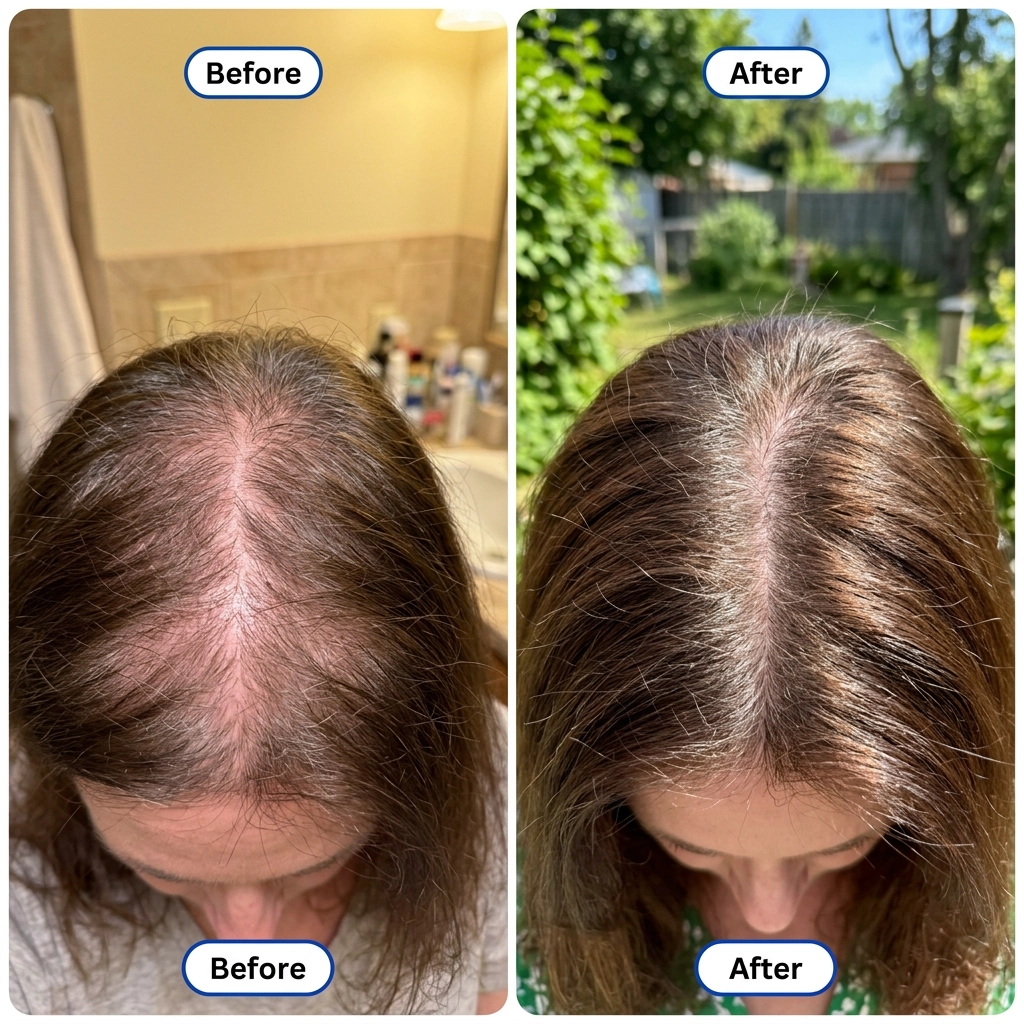
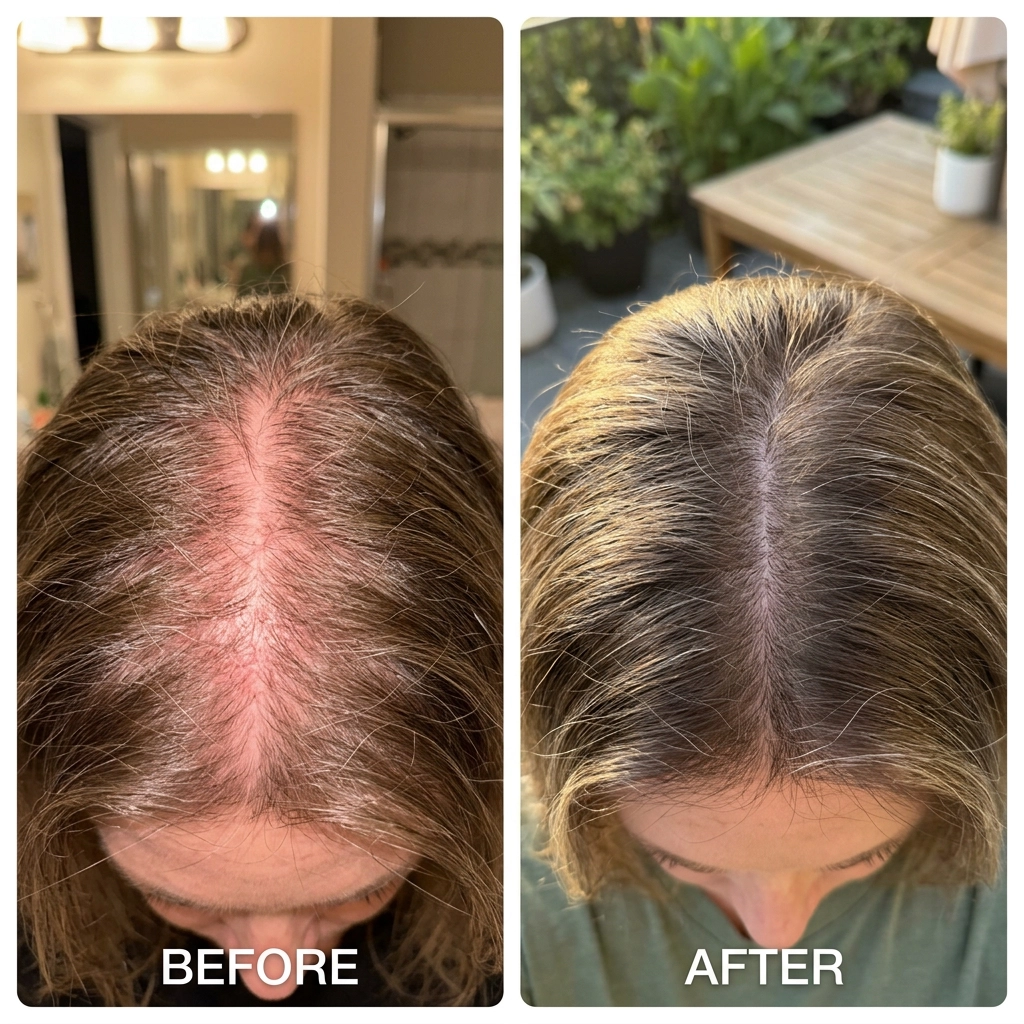
"Your bloods are normal" is not the same as "your follicles are fine".
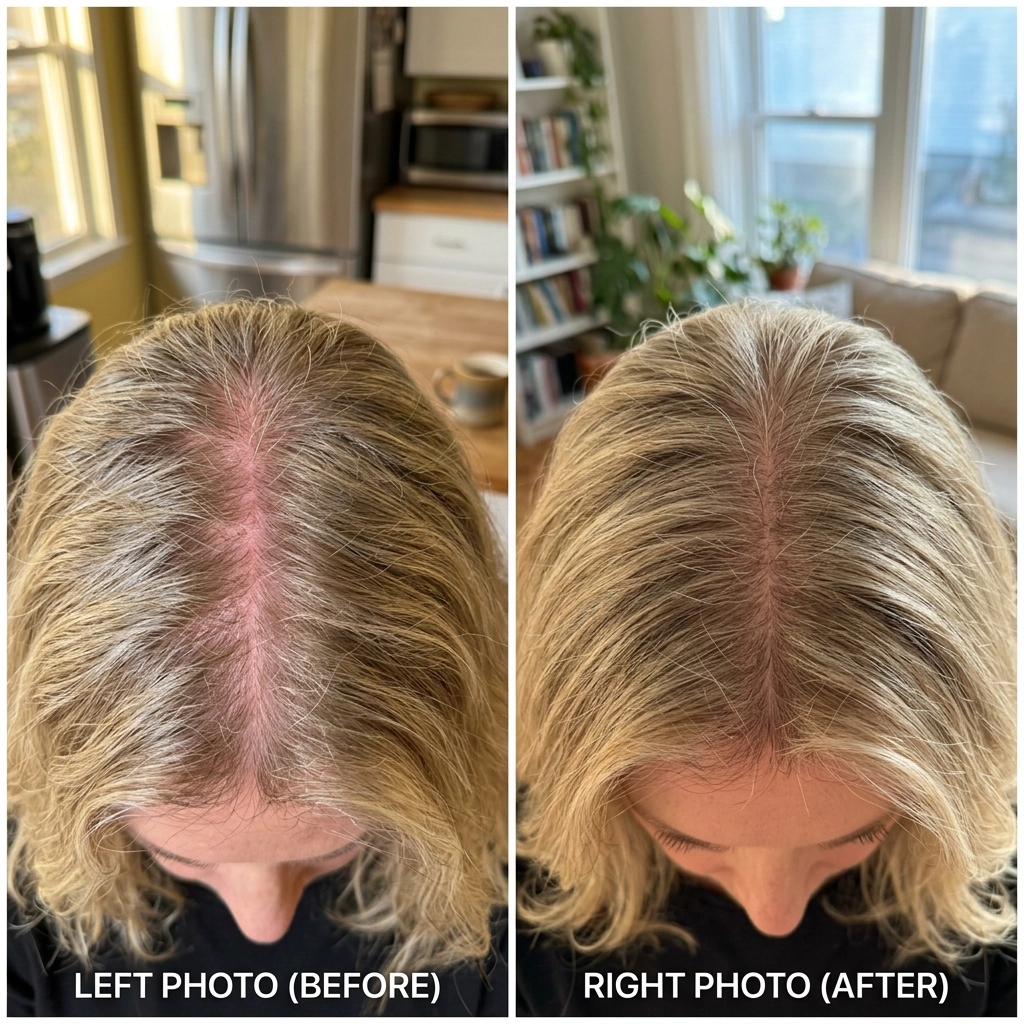
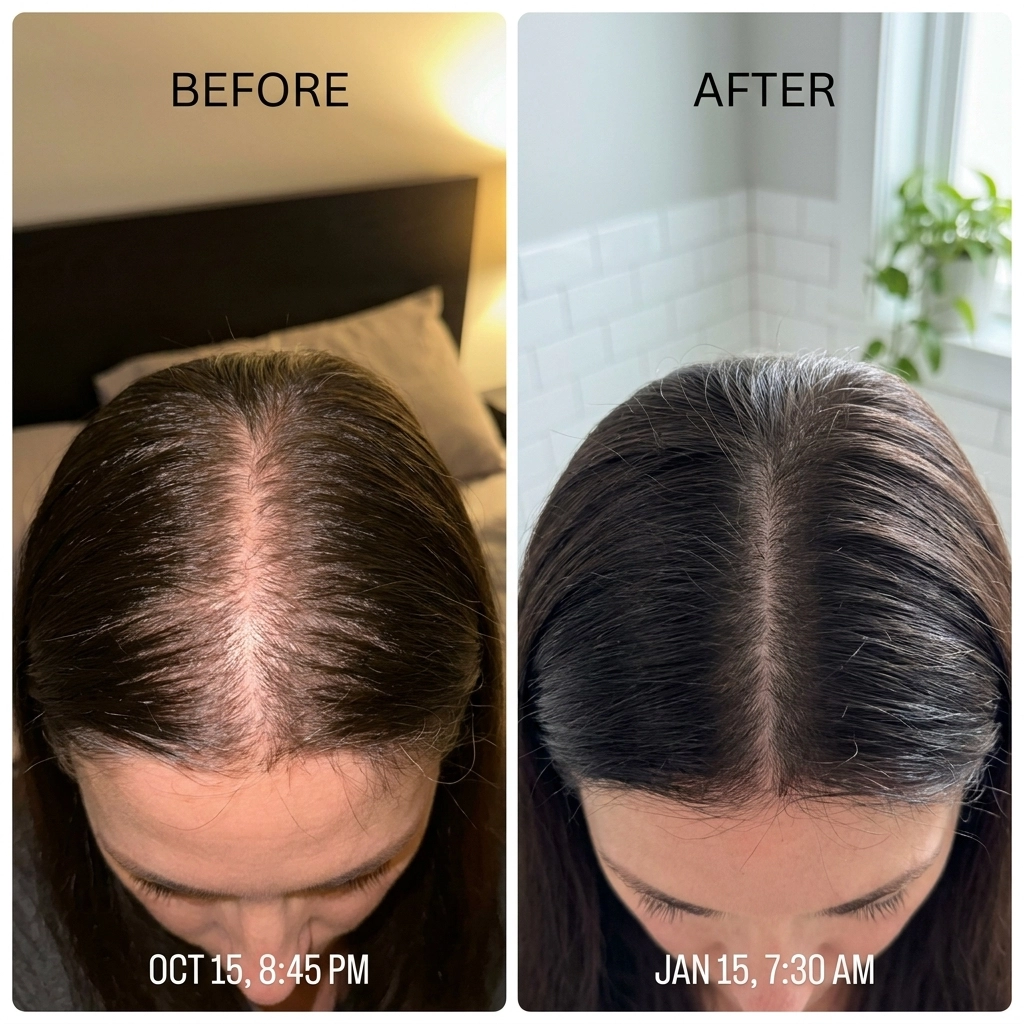
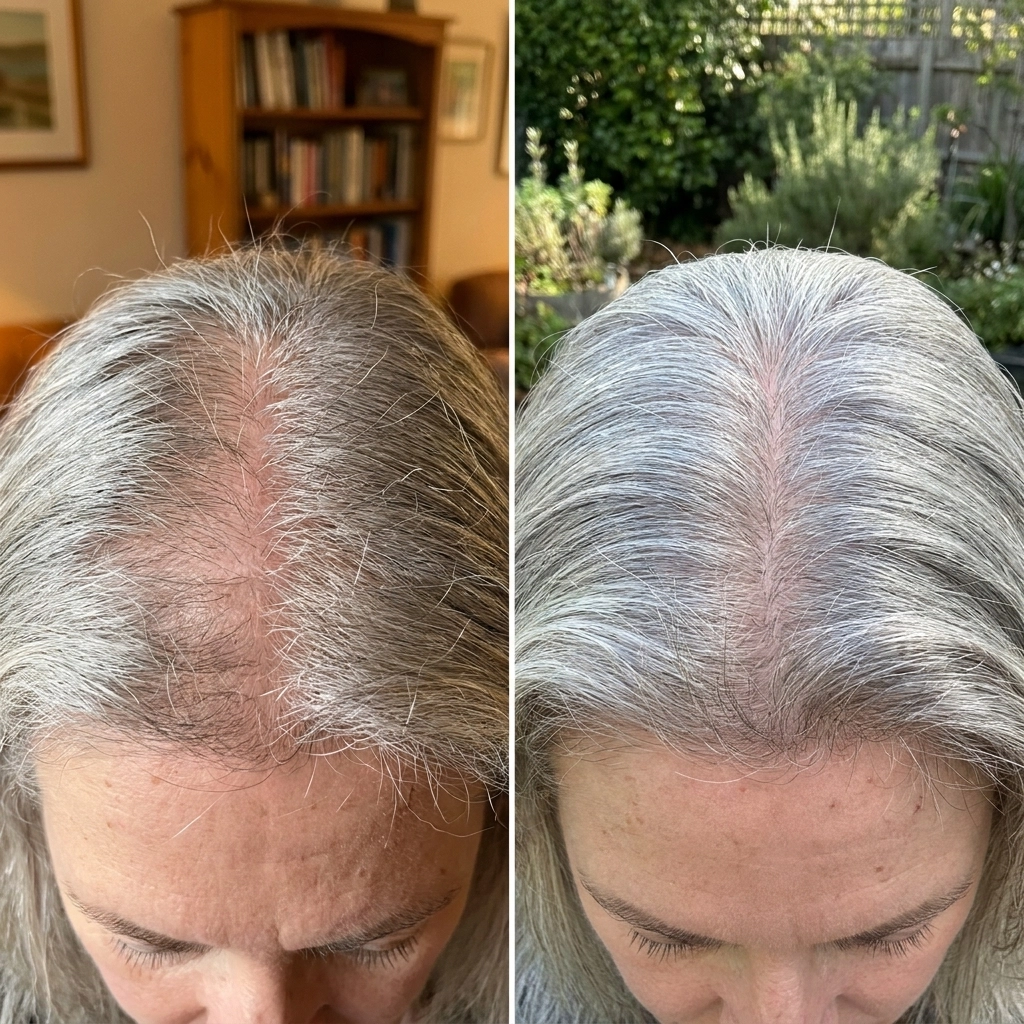
Helen had been to her GP. Bloods done. Everything "normal". Sent away.
I looked at the same results and saw three things that were making Reason 1 worse.
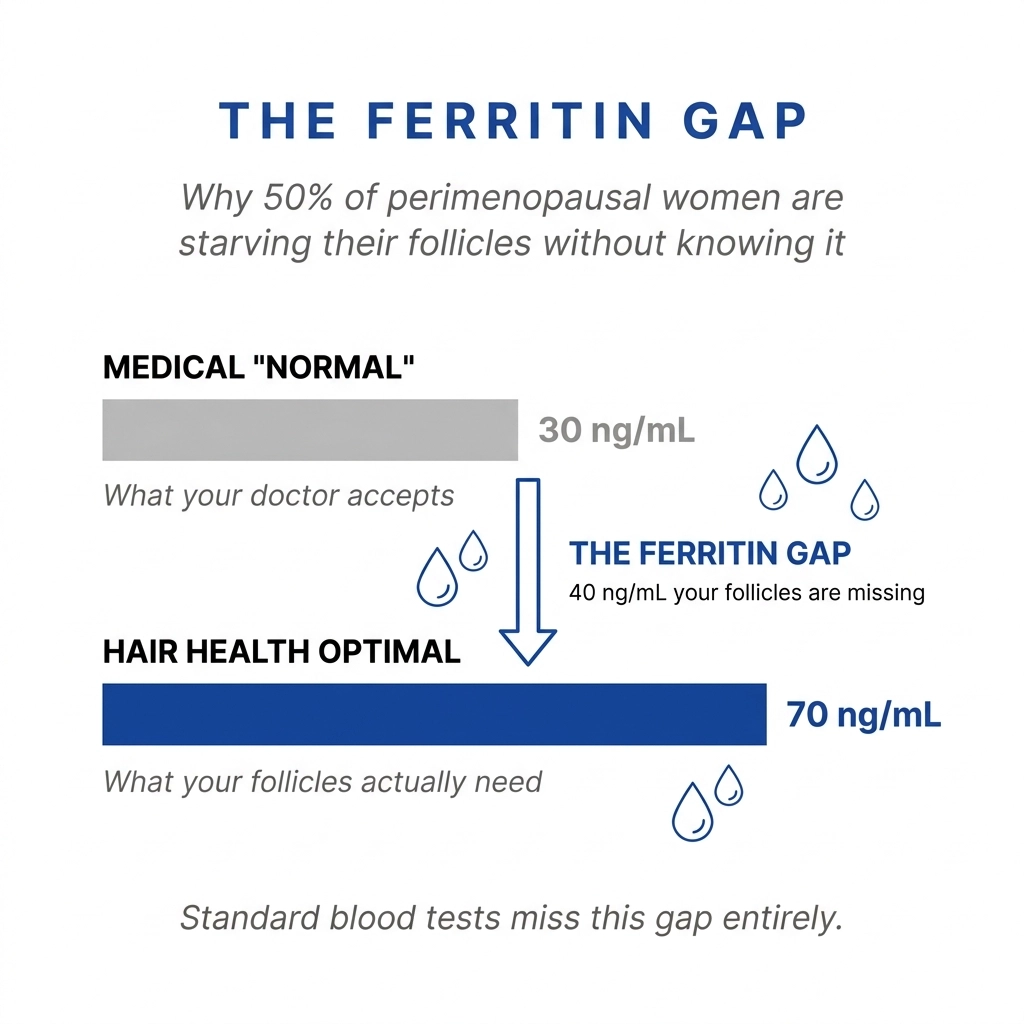
Her ferritin was 31. The lab range said normal. The hair-loss literature says otherwise: the threshold repeatedly recommended for women with hair shedding is a ferritin of at least 70 ng/mL (Trost, Bergfeld & Calogeras, Journal of the American Academy of Dermatology, 2006). Perimenopause is exactly when ferritin collapses — the heavy, unpredictable periods of your mid-forties drain iron faster than you replace it. At 31, her follicles were being told there wasn't enough iron to justify growing hair.
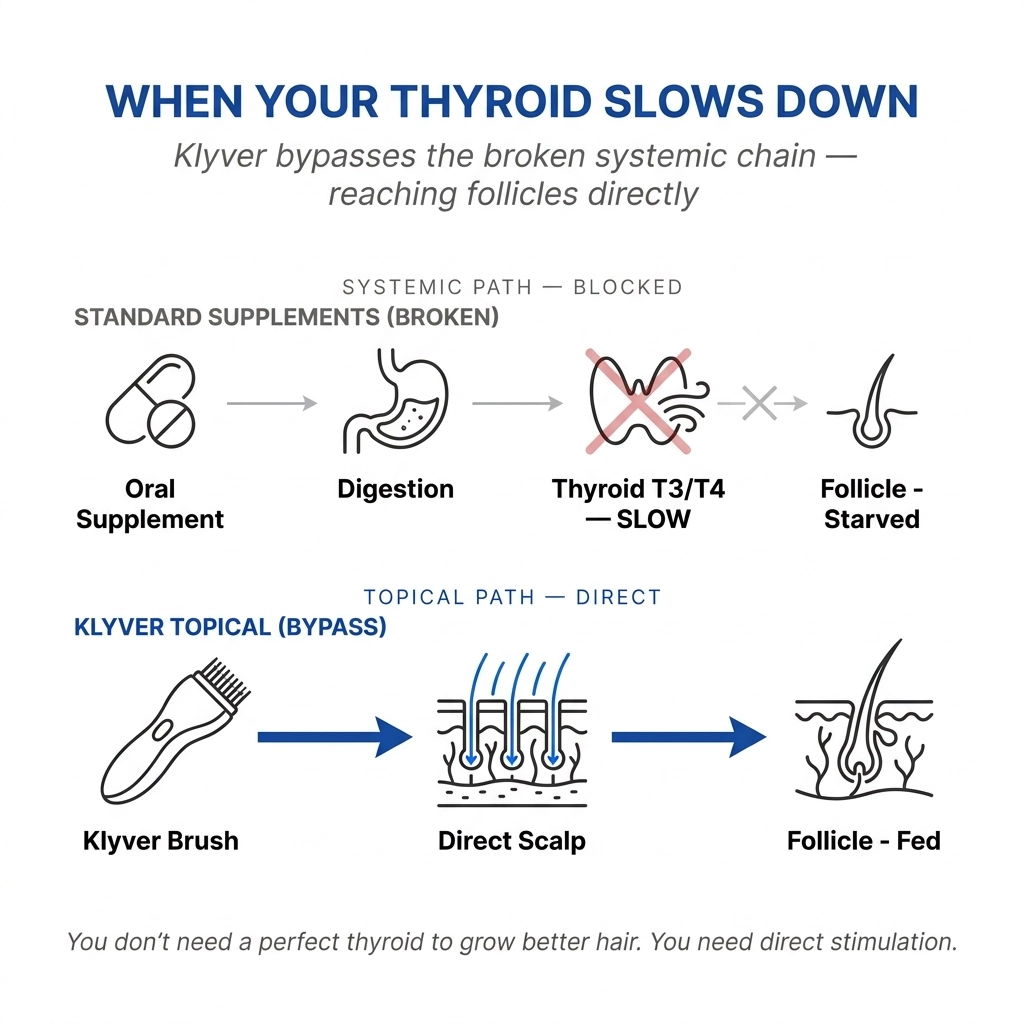
Only her TSH had been checked. That's the standard panel. It misses a lot. In one of the largest thyroid-screening studies ever run, roughly 1 in 10 adults had an undetected thyroid abnormality — more common in women, and rising with age (Canaris et al., Archives of Internal Medicine, 2000). A sluggish thyroid slows every follicle's cycle. The tell-tale signs are the ones women describe to me as "straw-like" hair and eyebrows thinning from the outer ends.
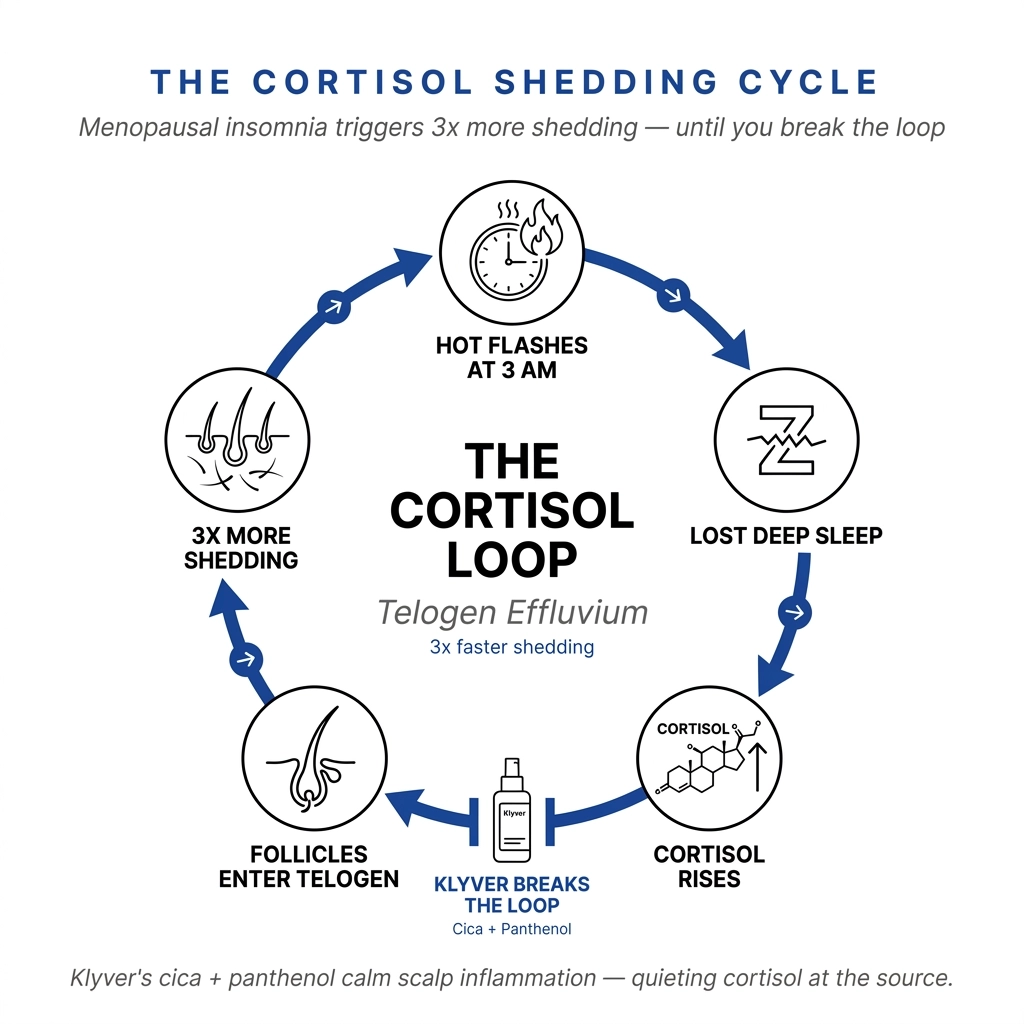
She was waking at 3 am, every night. Night sweats, then lying there. Chronic broken sleep keeps cortisol high, and sustained stress is one of the best-documented triggers for pushing follicles into their resting phase en masse — what we call telogen effluvium (Peters et al., American Journal of Pathology, 2006). Then the stress of losing your hair drives the cortisol higher. It's a loop.
So: three separate brakes on the follicle, and a results sheet that said "normal" on every line.
If you take one practical thing from this article: ask your GP for a ferritin level and a full thyroid panel, and say the words "hair loss" when you ask. It's free. Do it.
But correcting all of that takes months — and for some women the hair doesn't fully come back on its own. Which is why, in the meantime, they buy things. And this is where it goes wrong.